

Each year in June, the world observes Pride Month, a reminder of vital values such as freedom, visibility, and equality. At the request of vogue.ua, Ukrainian photographers share their work, exploring themes of gender, queer individuals, sensuality, visibility, and vulnerability in a country engaged in a brutal war for its very existence.
Sasha Kurmaz
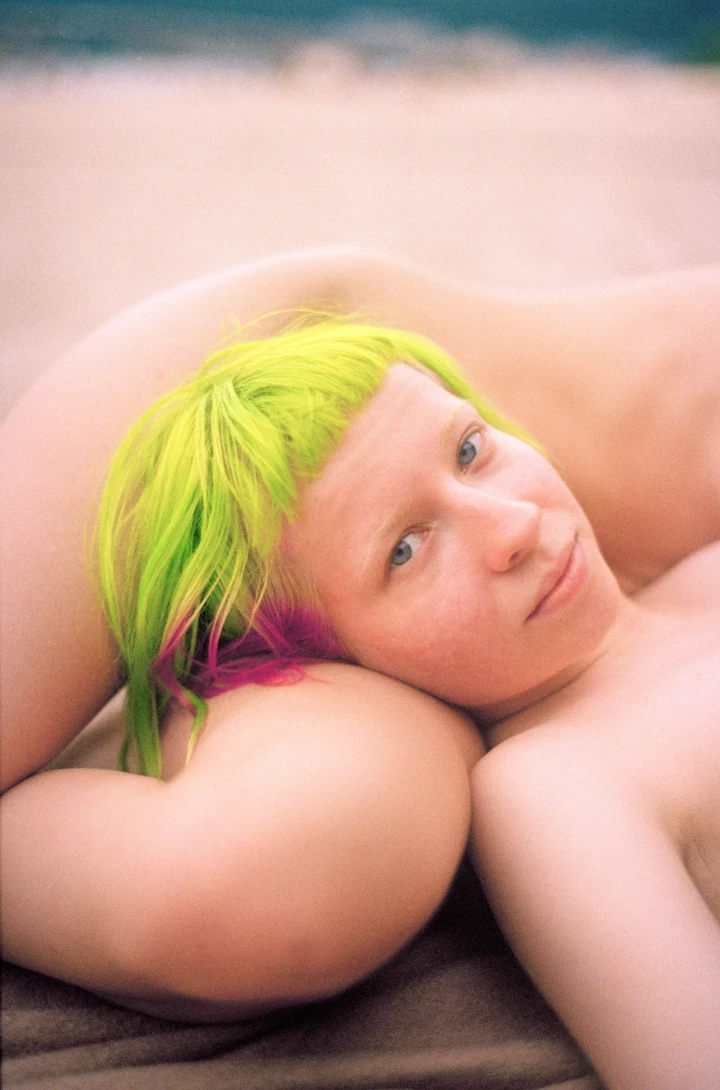
“Queer individuals are part of my circle—they are my close friends and colleagues, so their presence in my work is natural and organic. Furthermore, as a person and an artist, I feel a personal responsibility to make the community more visible, to legitimize it in the public sphere, and not to allow it to be marginalized. Queer Ukrainians live alongside us, fight on the front lines, and create contemporary culture. They are an integral part of our society and our shared struggle for freedom.”
Anton Shebetko
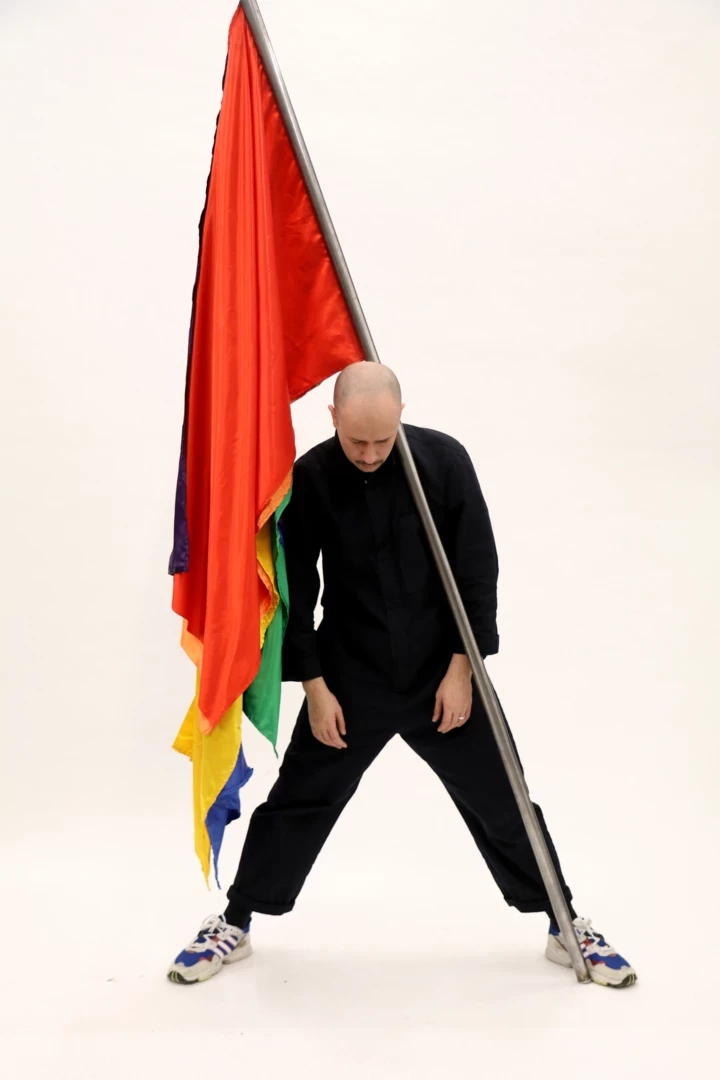
This is a piece from the “Self-Portrait / Ukraine” photo performance series, created in 2020. Unfortunately, it remains relevant today. The key element of the series is a large flag that merges two identities: queer and Ukrainian. It is composed of six separate panels that replicate the colors of the classic rainbow flag. Simultaneously, the stripes corresponding to the colors of the Ukrainian flag are slightly longer. These two identities are in conflict; they, like the flag itself, are not whole or complete, as finding balance and harmony between them is challenging.
The body here serves as the foundation and support, while the flag and the duality of these identities are, to some extent, a torment and a burden. This work is about personal conflict, which is part of a broader issue concerning the rights and obligations that individuals and the state have or should have towards each other.
Can a state declare its existence through its community if it is not interested in ensuring equal rights for all its members? Where is the line between the individual and the collective? Can a state exist without people, and who is a person who does not feel a sense of belonging to a community? Ultimately, this work is about unanswered questions.
Julie Poly
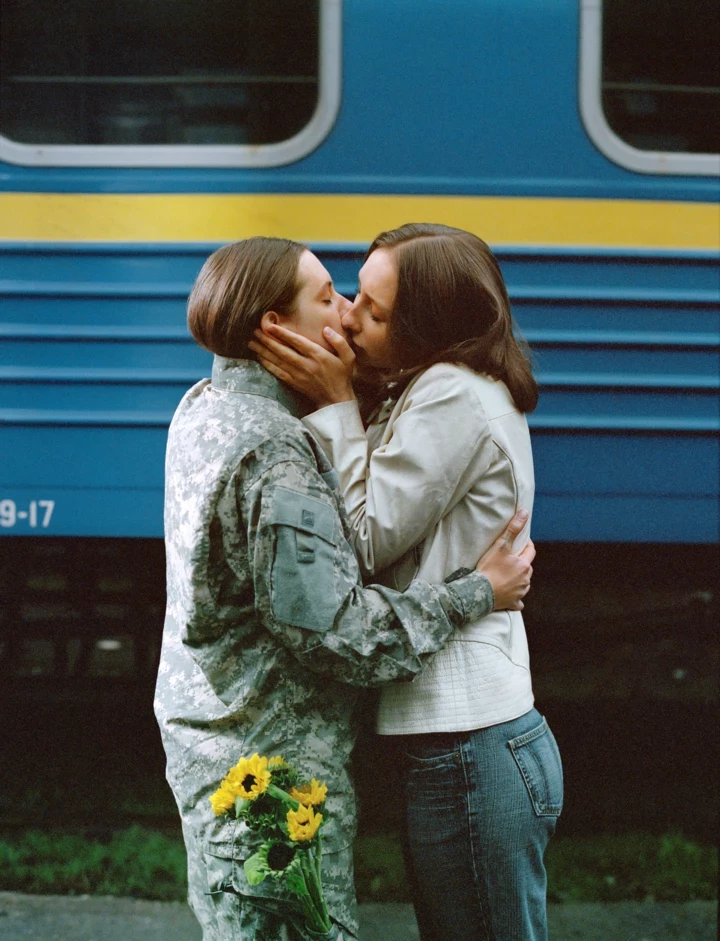
This photograph is a continuation of my “UkrZaliznytsia” series. I shot it in early 2025, during the full-scale war, with support from RIBBON International. The work was exhibited at the “The Stammering Circle” exhibition (curated by Marta Kuzma) at the Jam Factory Art Center in Lviv.
For me, a train represents a space of blurred boundaries, where the private and the public converge, and the usual distance between people disappears. This proximity was once almost erotic. In 2025, I returned to the series when the full-scale war had been ongoing for nearly three years, and the railway had become entirely different. It is now the artery of the country, carrying evacuees, the wounded, soldiers, and those displaced by the war. In this daily movement, queer individuals simply exist, including in the army. Meanwhile, same-sex couples in Ukraine still cannot marry or enter into a partnership. If a person dies on the front lines, their partner has no legal right to even retrieve the body and bury them. That is why this needs to be discussed.
A kiss on the platform. A classic farewell scene from postcards, typically depicted with a heterosexual couple. Here, it’s two women instead. For me, this frame is about devotion and tenderness.
Advertisement.
Vik Bakin
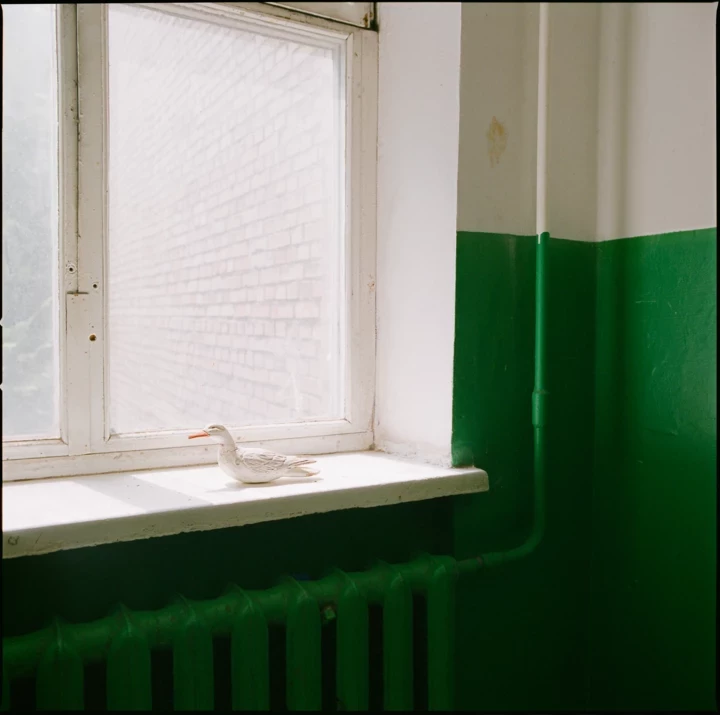
In the photo project To Be Who We Want To Be, which primarily consists of portraits, I occasionally capture simple still lifes. Here is one of them. I chose this photograph because I am interested in visibility without imposed interpretations—where presence is not reduced to ready-made readings or categories. It is important for me to portray people as individuals, not as carriers of clichés or expected images.
TBWWWTB is a long-term photo project about queer individuals in Ukraine. It emerged from a desire to document the social world that is important to me, while simultaneously avoiding visual clichés. I photograph people as distinct individuals, not as symbols of categories: their queer identity may be present but does not define how they appear or how they are perceived.
The photograph was taken in the entrance hall of a residential building. The carved wooden duck is a personal item belonging to one of the subjects of my project. It sat on a clean windowsill as the sole object in this space, seemingly displaced into an environment to which it does not belong.
When I look at this photograph, I feel a sense of calm and slight tension. I am intrigued by how an ordinary object can retain a person’s presence and remain visible without explanation. This continues my inquiry into how presence can be visible yet not reducible to expected interpretations.
Alim Yakubov
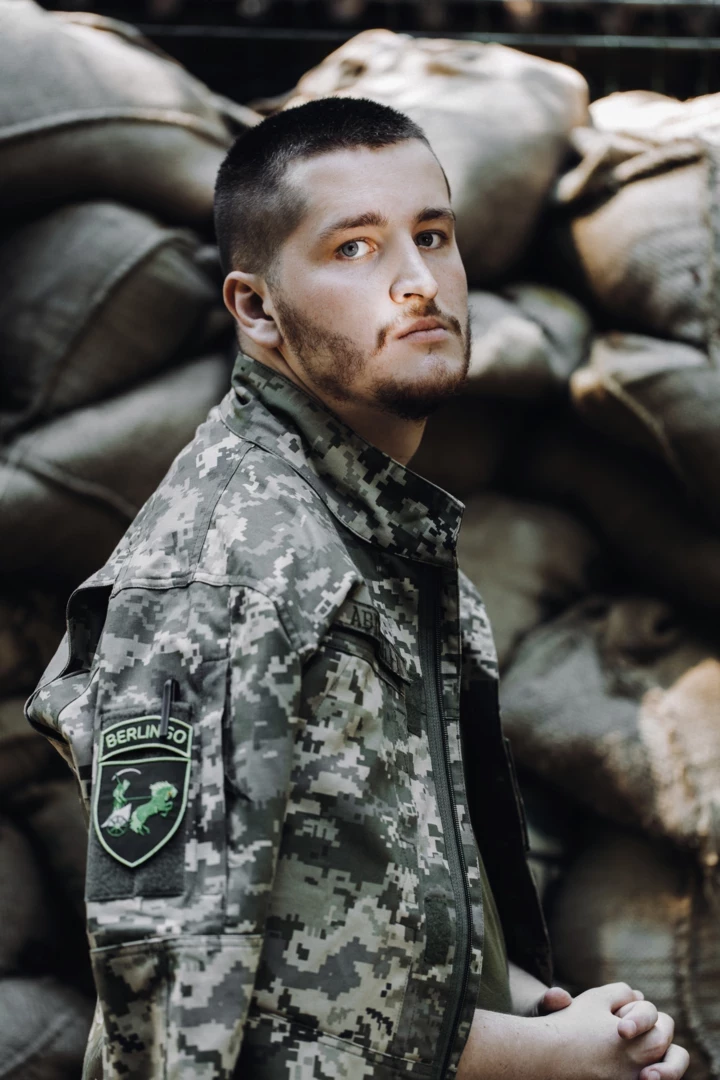
“My photography centers on people and their stories. Themes of gender, identity, and queer experience hold a significant place in my work. Through the personal narratives of individuals and communities often underrepresented in the public sphere, I explore issues of visibility, recognition, human dignity, and the right to be oneself, particularly within the context of war, military service, and reintegration into civilian life.
The project “LGBTQ+ Defending Ukraine” tells the stories of queer service members who are defending Ukraine. I selected these particular photographs because they are deeply personal to me. During the shooting process, the individuals in the frame cease to be mere subjects of the project—any distance between us dissolves. By listening to their accounts, I experience these stories alongside them, and it is this genuine, lived connection that I aimed to convey. I remain in contact with some of the individuals involved.”
Hnat
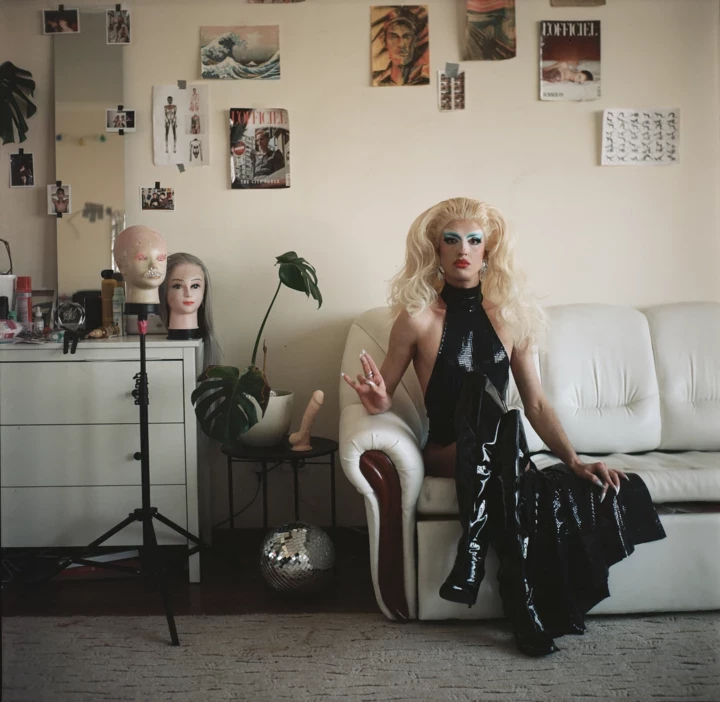
“I primarily photograph queer individuals. They are the heart of my creative work. However, above all, I never photograph gender or sexual orientation—I photograph people. For me, photographing queer individuals means not making them “other,” but normalizing their existence and showcasing their lives as ordinary, intimate, and human. I have always considered myself an observer. Photography allows me to be a witness and to preserve the unique stories of the people who come before me.
I had always wanted to photograph drag. When a few of my friends agreed to be part of this photo project, I realized that I was interested not so much in the performance itself, but in the individuals behind it and the preparation process. Drag cannot be reduced to a single image—it exists at the intersection of identity, performance, vulnerability, and self-expression. Through the lens, I aimed to capture this multifaceted nature while documenting the process from preparation to the final look. Every time I view the shots from this session, I first see the courage of people who are not afraid to be exactly who they want to be.”